
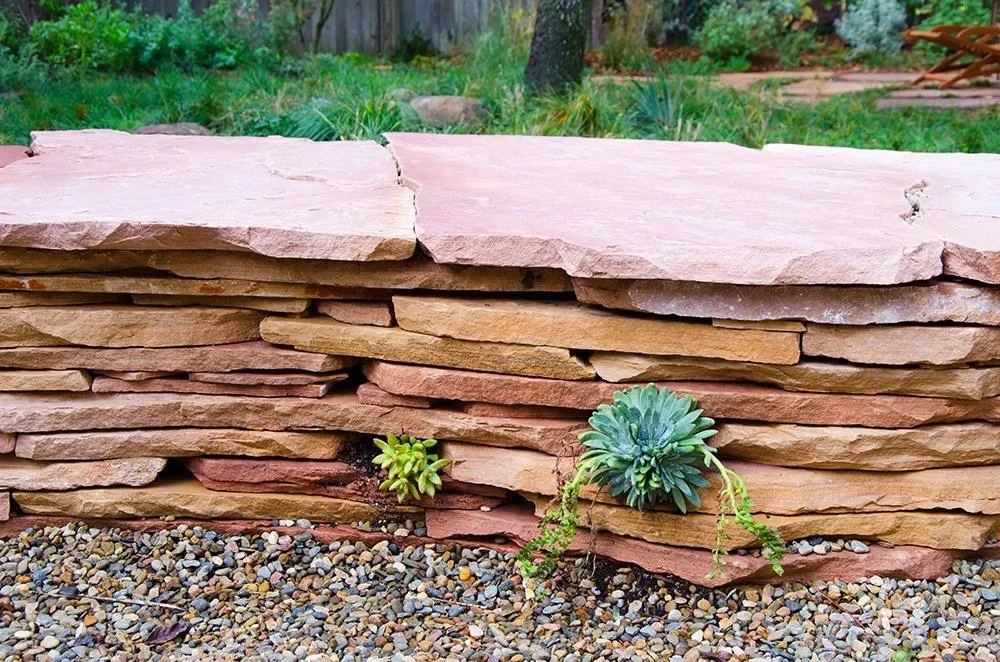
Dry-Laid Stonework and Hardscaping
Beyond Gardens builds dry-stacked stone walls, flagstone patios, permeable paths, and stone seating across Santa Clara County using traditional mortar-free technique. Our stonework is done by our own mason, not subcontracted. Dry-laid construction lets water pass through, flexes with ground movement, and can be rebuilt or relocated rather than demolished.
What is dry-laid stonework, and why does it matter?
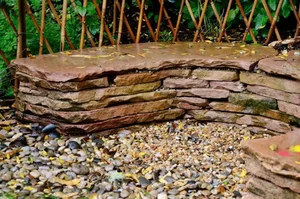
Stone fitted and stacked without mortar, held by gravity, friction, and the mason’s judgment about which face goes where. It is one of the oldest building techniques there is, and it outperforms mortared construction in several ways that matter specifically in a California landscape.
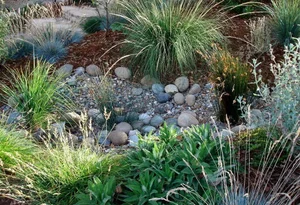
Water passes through
A dry-stacked wall drains itself. Mortared walls trap water behind them, build hydrostatic pressure, and eventually fail or require weep holes and drainage systems to compensate.
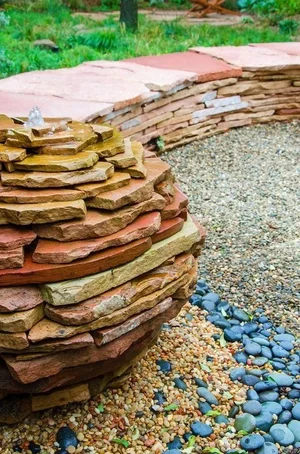
It moves without cracking
Ground shifts with seasonal wet and dry cycles in clay soil, and it shifts in earthquakes. A dry-laid wall flexes and settles. A mortared wall cracks.
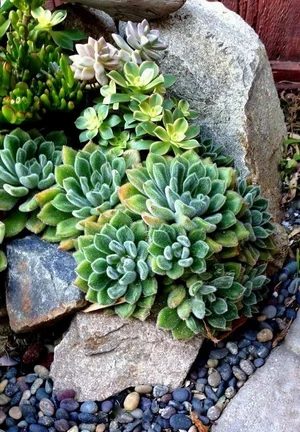
It is habitat
The gaps between stones shelter lizards, native bees, and beneficial insects. A mortared wall is a dead surface.
It is reversible
Stone can be reset, extended, or relocated. Nothing has to be demolished and hauled away.
What we build
Retaining walls for terracing slopes and creating usable level ground
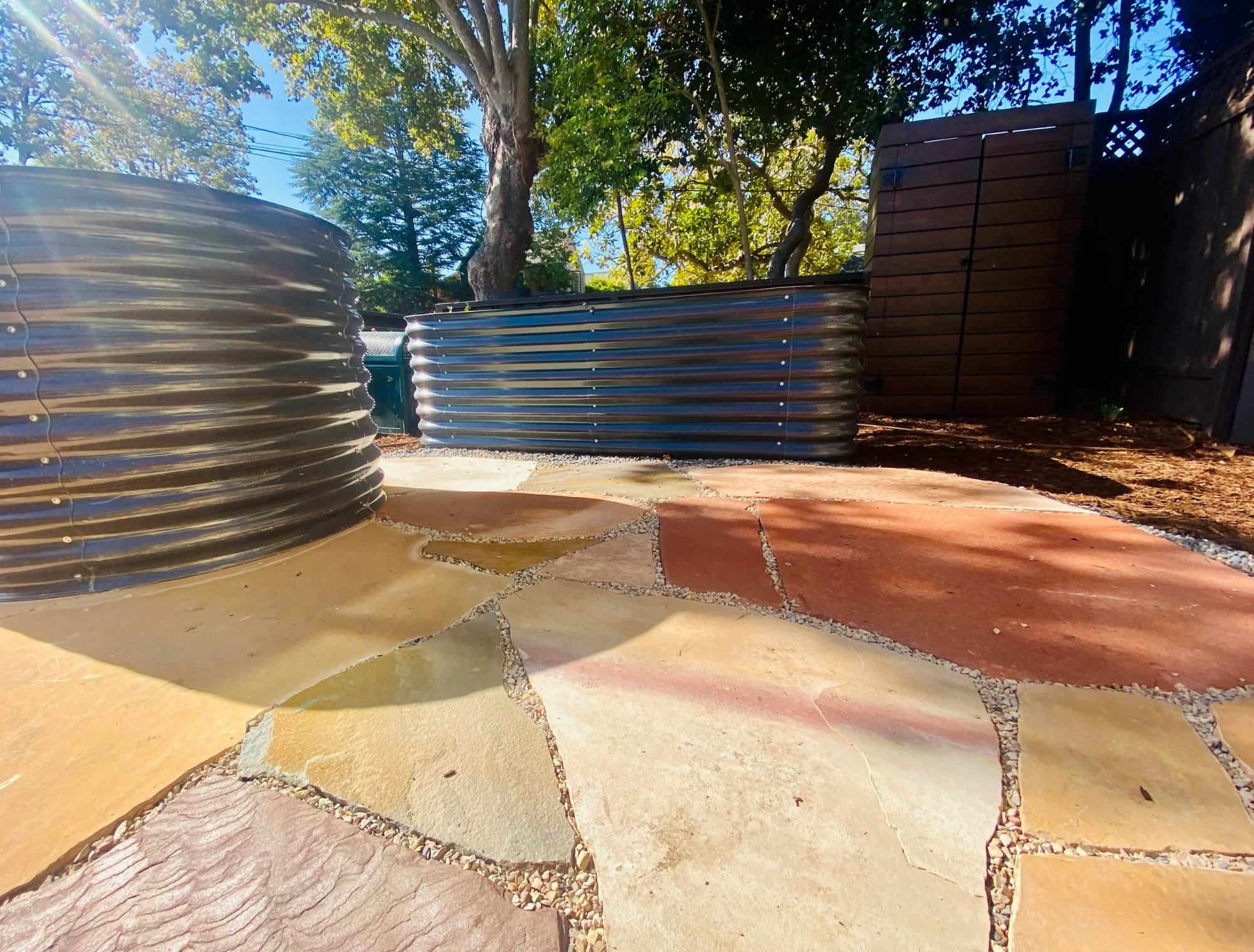
Flagstone patios, including multi-color natural stone laid as composition rather than pattern
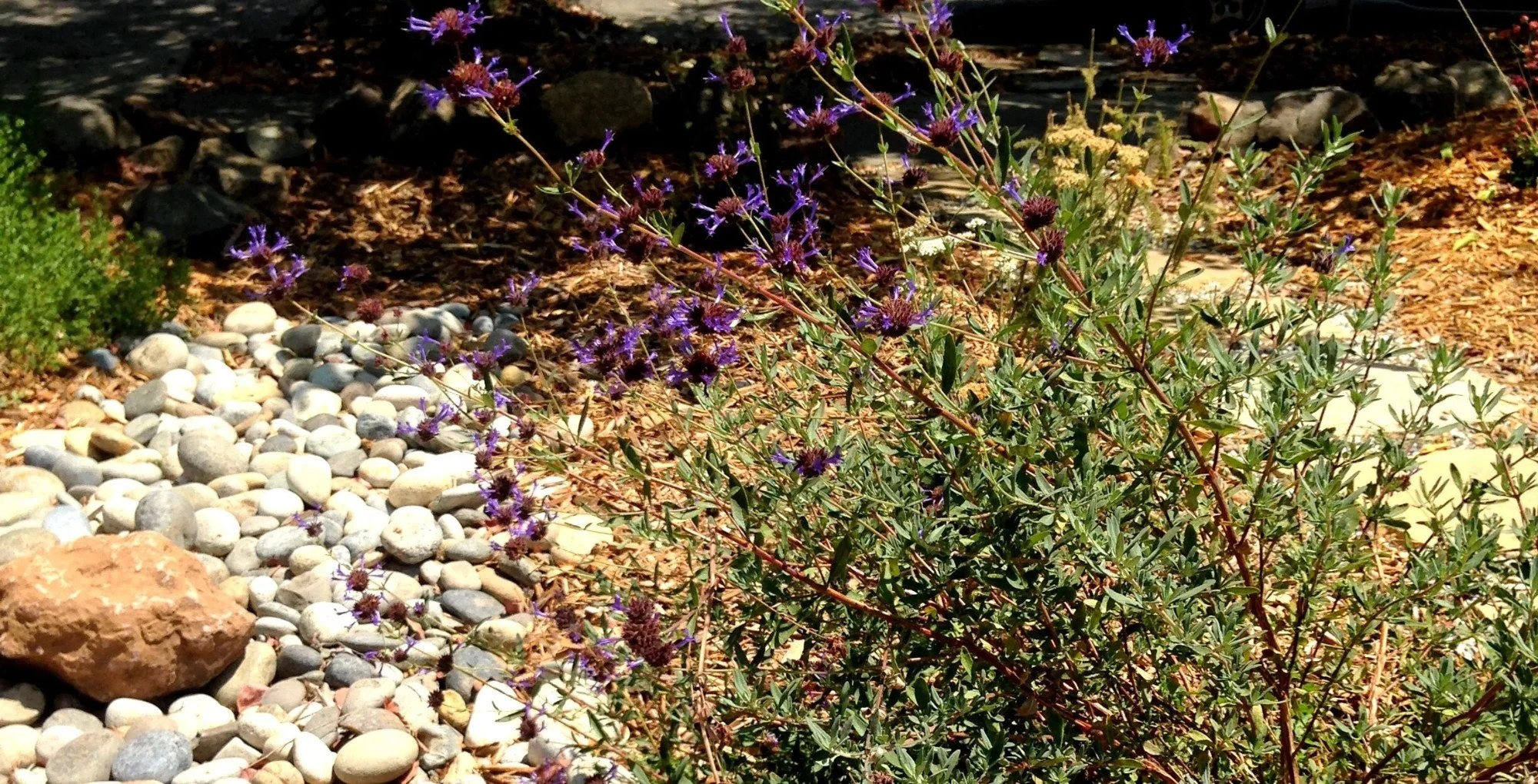
Permeable pathways in stone, gravel, or decomposed granite, so rain soaks in rather than running off
Stone seating, steps, and benches built into the landscape rather than placed on it
Raised planting beds and borders in stacked stone
Urbanite work reusing broken concrete from your own site as a stone substitute, which keeps material out of landfill and costs less than imported stone
How does hardscape fit a water-wise garden?
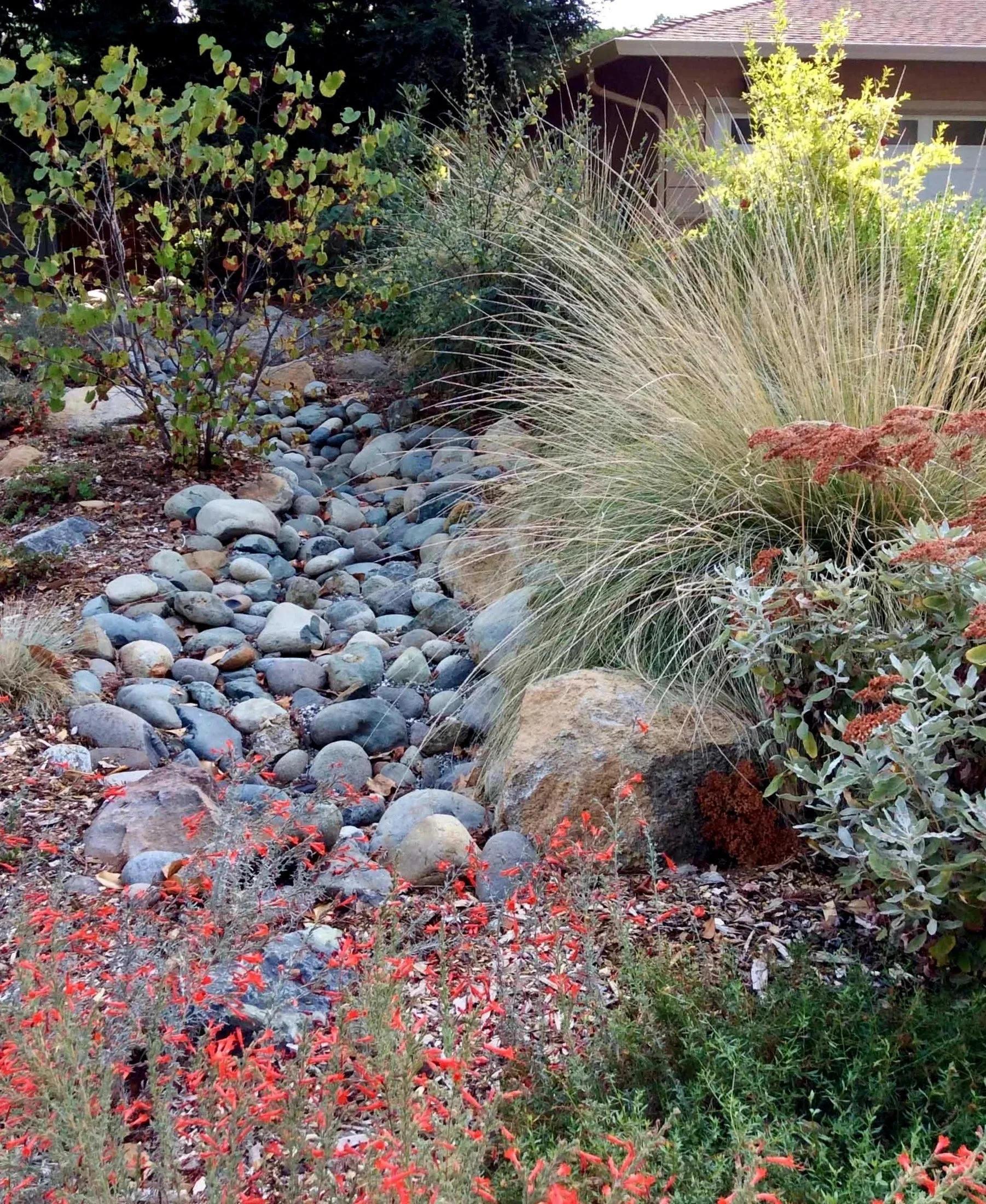
Correctly designed, hardscape is part of the water system, not a competitor to it.
Permeable surfaces let rain infiltrate where it falls instead of shedding to the storm drain. Paths and patios shape where water travels and can direct roof and surface runoff into planted basins.
Retaining walls create terraces that slow water down on a slope, giving it time to soak in. Stone also moderates temperature, holding warmth into the evening and creating microclimates plants respond to.
The failure mode is the opposite approach: sheets of impermeable concrete that dump water into the street and bake the yard.
-
One to four weeks for most residential work, depending on scale, stone type, and access. Hand-fitted dry-laid work is slower than mortared or manufactured-block construction, and that is the point.
-
Yes, when it is built properly. A dry-laid wall is built with the mass and the batter to stand on its own, and we size and seat the stone for the height. We will tell you where a mortared or engineered solution is the safer answer.
-
Above a certain height, or where they carry a surcharge such as a driveway, yes. We flag it early and coordinate with your building department rather than discovering it mid-build.
-
Often, yes. Broken concrete makes good dry-laid paving and wall stone, and reusing it keeps it out of landfill and off a truck. We assess thickness and condition before committing to it.
-
Yes. We repair and extend existing walls, paths and steps, matching stone and coursing where we can source it. Where the original stone is unavailable we will propose the closest honest match.