
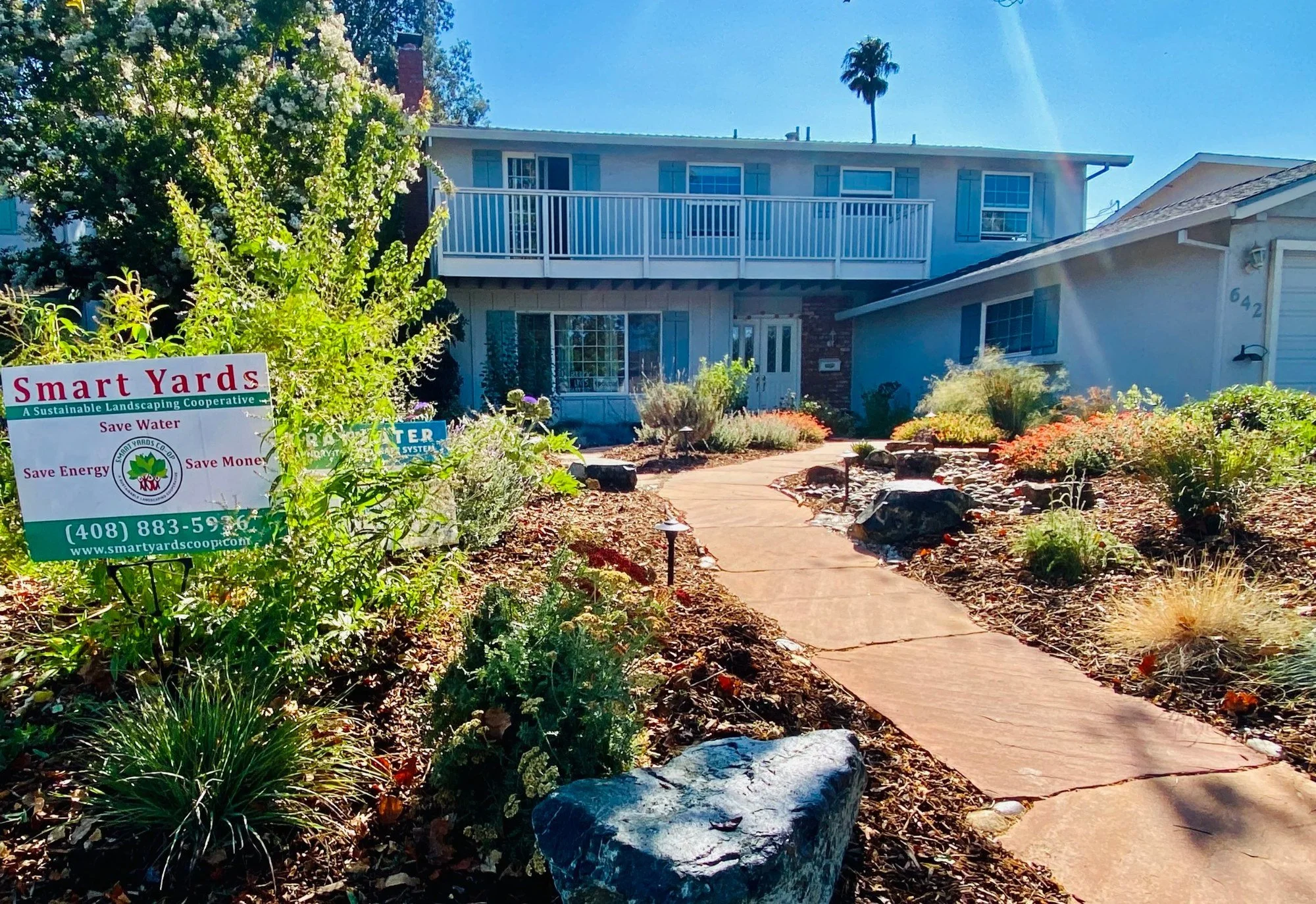
Permaculture Landscape Design
Beyond Gardens designs water-wise residential landscapes across Santa Clara County using permaculture principles. A design includes site and soil analysis, sun and water mapping, a scaled layout, a California native plant palette, and an irrigation strategy. We are a Valley Water Approved Professional Landscape Designer, so front-yard designs can qualify for rebate reimbursement.
Every design begins on the ground, not on a screen. We walk the site, watch where water goes when it rains, find where the afternoon sun cooks and where the shade holds, and dig to see what the soil is actually made of.
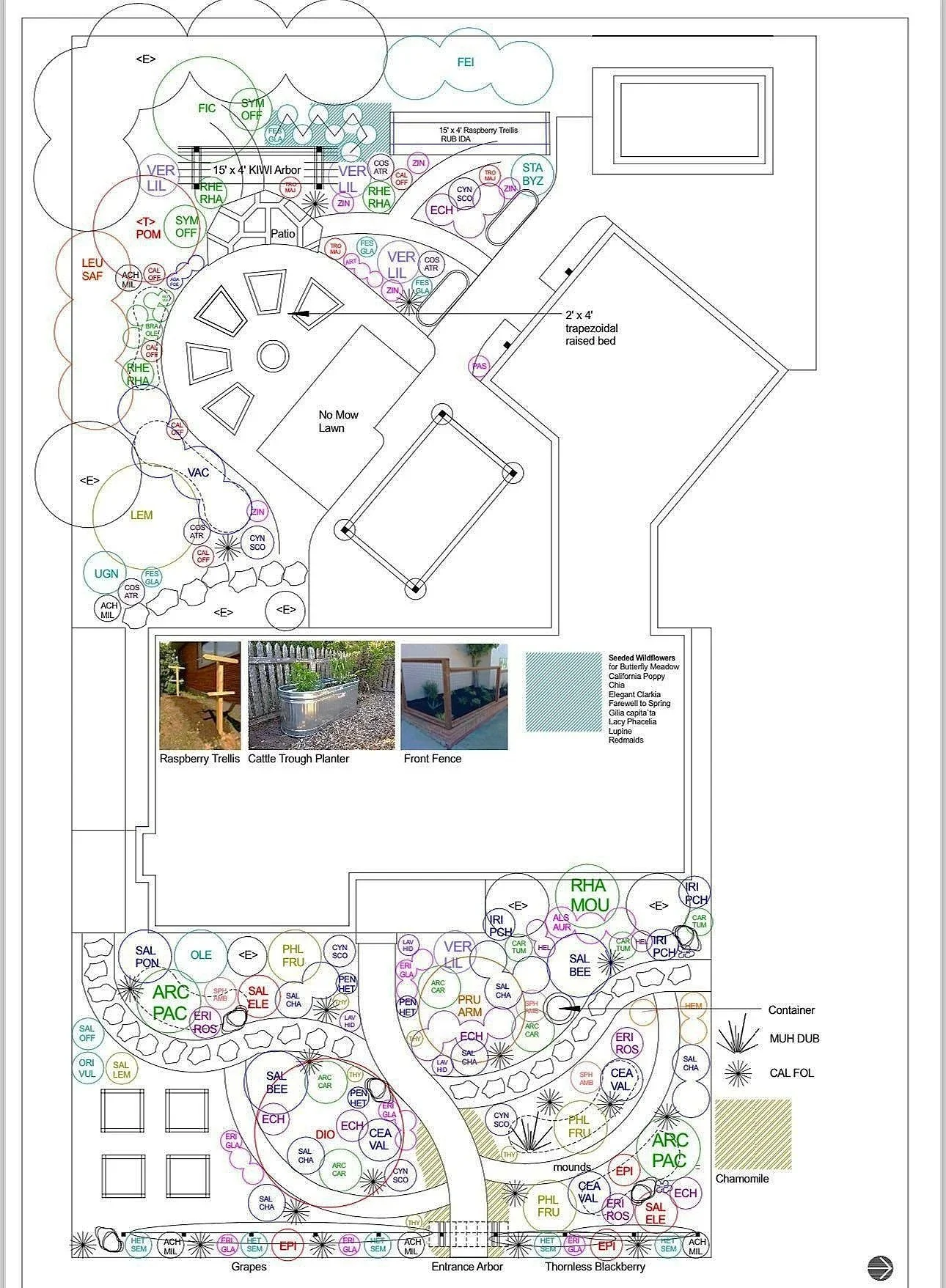
What you receive:
Site analysis
sun exposure by season, drainage patterns, soil texture and structure, existing tree health, microclimates, views worth keeping and views worth screening.
Scaled layout plan
beds, pathways, patios, structures, and circulation, drawn so a contractor can build from it.
Plant palette
species selected for this specific site, with bloom sequence mapped so something is flowering nearly year round. Predominantly California natives and Mediterranean-adapted species, all child and pet safe.
Water strategy
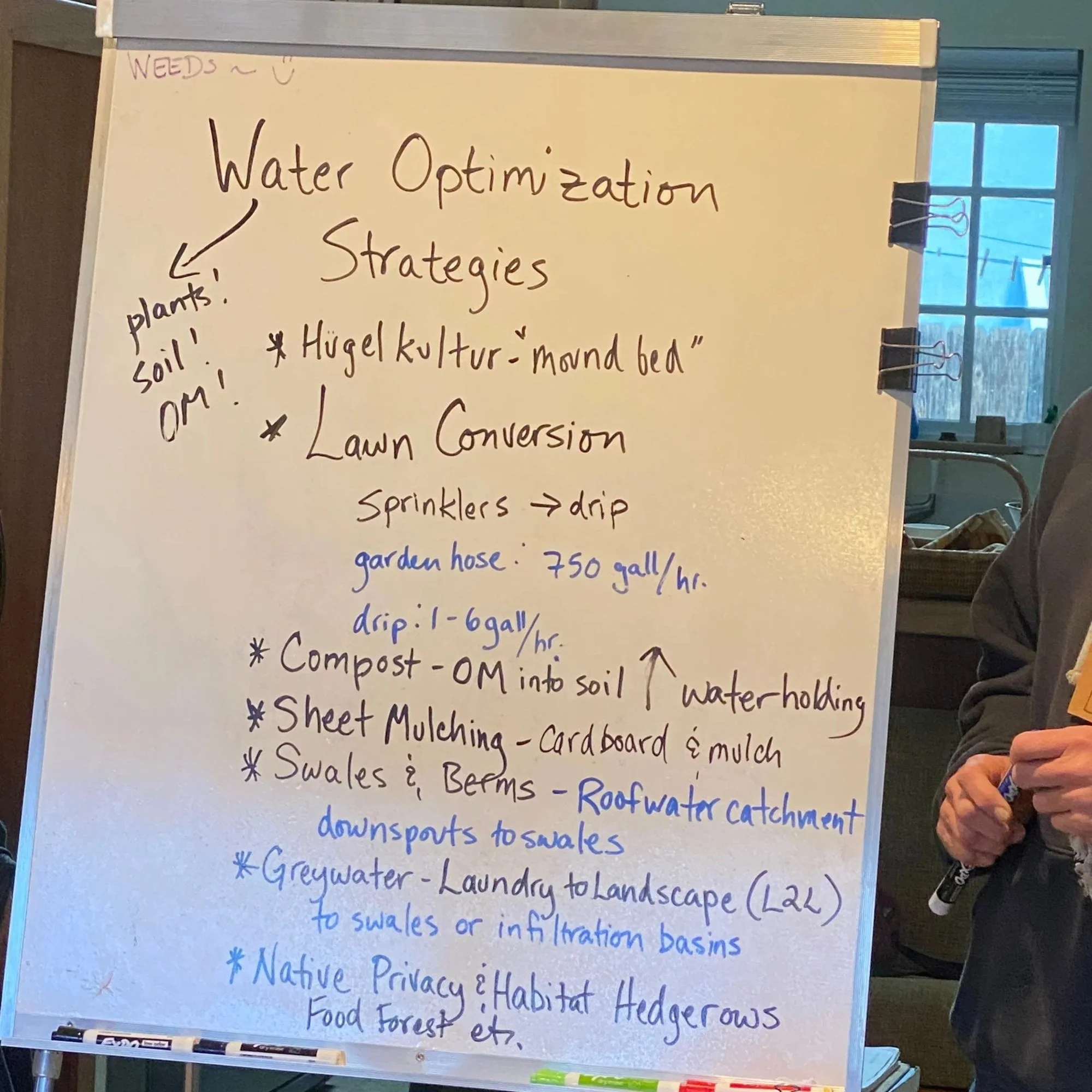
how the yard will be irrigated, whether greywater or rainwater capture makes sense here, and what the projected water use looks like versus the current lawn.
Phasing plan
if the budget needs to be spread across two or three years, we sequence the work so each phase stands on its own and nothing gets torn out later.
How does
permaculture design differ from conventional
landscape design?
Conventional design starts with a look and then figures out how to keep it alive. Permaculture design starts with how the site actually works and lets the look emerge from that.
Practically, that means we ask questions most designers skip. Where does your roof water go now, and could it go somewhere useful? Which side of the house do you walk past every single day, and is that the right place for the herbs? What does the yard need to do in ten years, when the oak has grown and the kids have not?
The twelve permaculture principles guide the process, but they show up as ordinary decisions: putting the vegetable bed where you will actually see it, catching rain on the uphill side, using the strip between sidewalk and street instead of ignoring it.
How long does the design process take?
Typically three to six weeks from site visit to final plan, depending on complexity and how quickly feedback comes back.
Discovery call
Goals, budget range, timeline
Site visit
Full property walk and measurement
Concept
Rough layout, direction, plant character
Revision
Your feedback, our adjustments
Final plan
Buildable drawing, plant list, water plan
Can the design cost
be reimbursed?
For front-yard lawn conversions in Santa Clara County, often yes. Beyond Gardens is on the Valley Water Approved Professional Landscape Designer list, which means a design consultation done through the Landscape Design Assistance Program can be reimbursed up to $200 after your conversion project is completed and approved. Full details on the Lawn Conversion and Rebates page.
Note that the rebate is a reimbursement, not a discount. You pay the consultation fee, keep the receipt, and Valley Water reimburses you after project completion and inspection.
-
No. The design is yours. Most clients do have us build it, because the crew and the designer are the same organization and nothing gets lost in translation, but you are free to take the plan to another contractor.
-
That is fine. We regularly design a single area, a front garden, a courtyard or a side yard, and many clients phase the rest over several seasons. We still look at the whole property so the piece we design now connects to whatever comes later.
-
Only if that is what you want. Native planting can be laid out as loosely or as formally as you like. Structure comes from layout, repetition, edges and hardscape, so a native garden can read as tidy and deliberate year-round.
-
Yes. We work on commercial and multi-family sites as well as single homes. Those projects usually involve more coordination around access, irrigation zoning and long-term maintenance, and we plan for that from the start.
-
Most Bay Area soil we meet is compacted, depleted or both, and that is workable. We assess drainage and structure first, then rebuild soil biologically with decompaction, compost, mulch and the right plants.