
Ecological Garden Maintenance
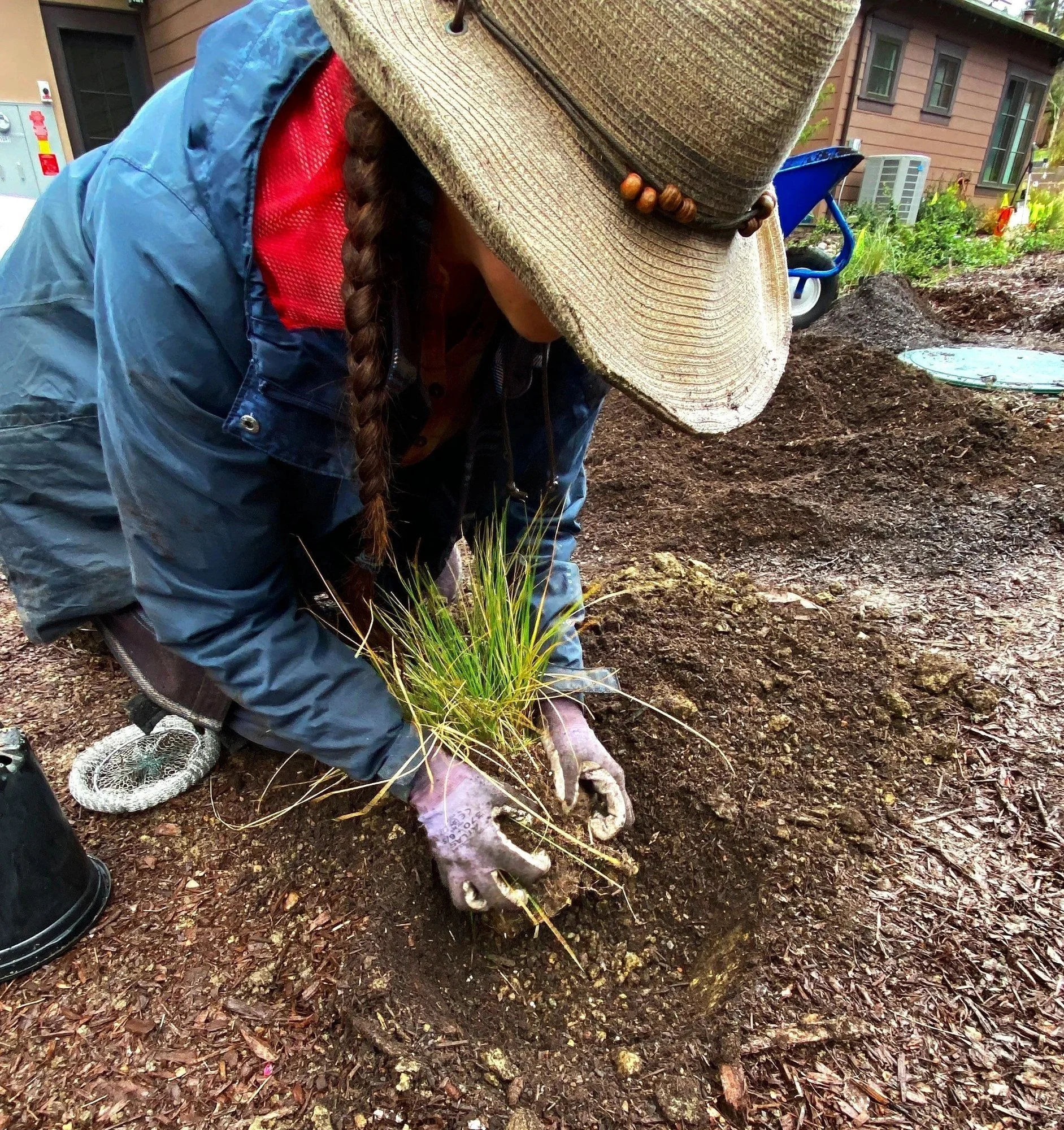
Beyond Gardens provides ongoing organic maintenance for native and water-wise gardens across Santa Clara County, including selective pruning, mulching, soil health management, irrigation monitoring, plant care, and ecological pest management. Visits are scheduled monthly or seasonally. We use no synthetic fertilizers, pesticides, or herbicides.
Because most landscape maintenance is designed to keep a conventional yard in a fixed state, and an ecological garden is supposed to change.
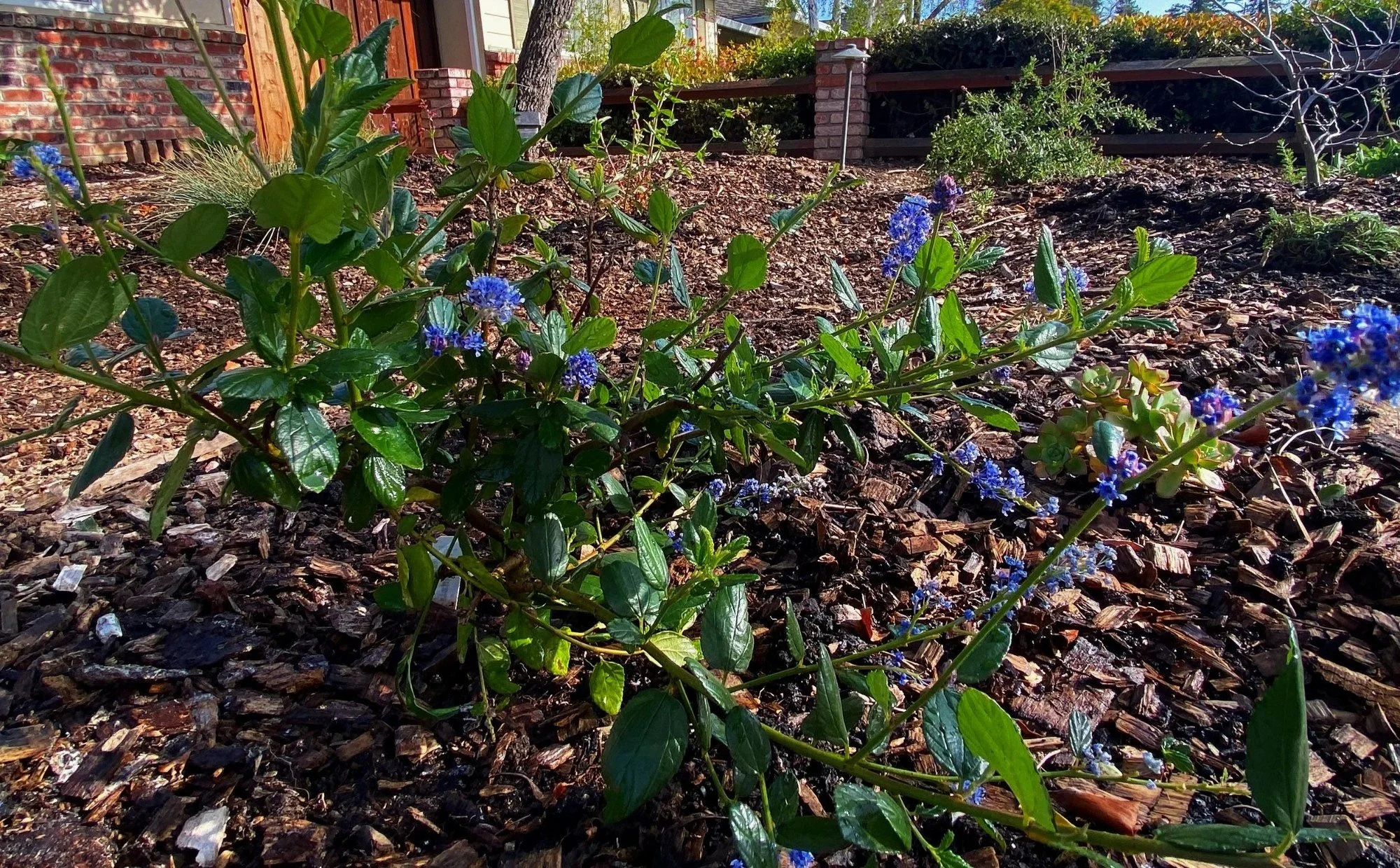
A standard maintenance crew works fast and uniformly: shear everything to the same shape, blow the leaf litter away, spray whatever is growing where it should not be. Every one of those actions damages an ecological garden. Shearing native shrubs into balls ruins their form and their bloom. Removing leaf litter removes the mulch layer and the overwintering habitat. Herbicide kills the soil biology the whole system depends on.
We do the opposite. Selective pruning that respects each species’ natural form and bloom cycle. Leaf litter left in place as free mulch and habitat. Weeds managed by hand and by mulch. Seed heads left standing through winter for birds and insects, cut back when the season calls for it rather than on a fixed schedule.
What is included in a maintenance visit?
Selective pruning by species, timed to bloom and dormancy rather than to the calendar
Mulch management, topping up and maintaining depth without smothering crowns
Soil health, compost application, and decompaction where needed
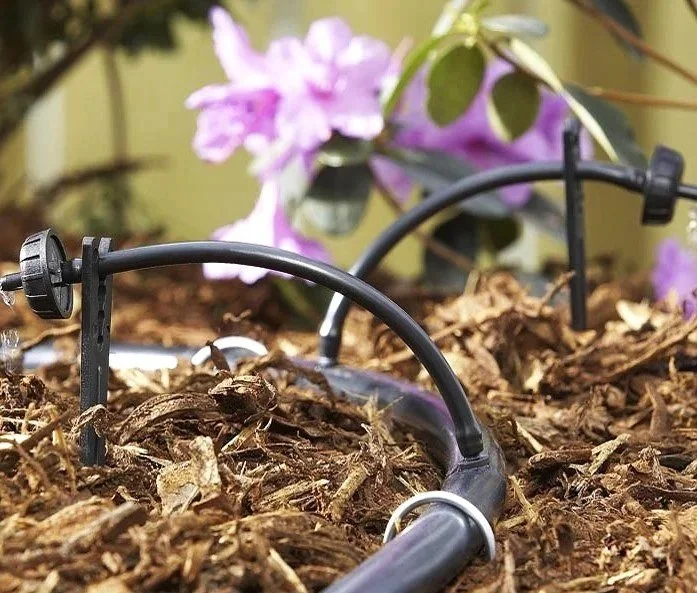
Irrigation check, testing zones, finding leaks, adjusting emitters, reprogramming controllers seasonally
Greywater system check where installed, including valve function and basin condition
Plant health assessment, catching stress and disease early
Ecological pest management, encouraging predators and intervening minimally
Weed management by hand and mulch, never chemically
Seasonal cleanup calibrated to habitat value, which means leaving some things standing on purpose
The trajectory is downward, which is the opposite of a conventional landscape.
How much maintenance does
a native garden need over time?
The first three years are where gardens are made or lost. A well-designed native garden that gets poor care in year one often gets blamed for failing when the design was fine.
Establishment watering, weed pressure is highest, close monitoring
Reduced watering, plants filling in, moderate weeding
Canopy and groundcover closing, weeds suppressed, watering minimal
Seasonal pruning, occasional mulch, irrigation checks
-
Yes. We take on existing gardens, especially native and water-wise ones that have been getting conventional mow-and-blow care and are suffering for it. The first visit is usually an assessment and a recovery plan.
-
It depends on the garden and its age. A young planting wants more frequent visits through its first summers; an established native garden often needs only a few visits a year. We set the schedule with you and change it as the garden matures.
-
We keep blower use to a minimum. Leaf litter is habitat and free mulch, so most of it belongs on the beds rather than in a bag.
-
Often, yes. We start by diagnosing the cause, usually irrigation, drainage, compaction or the wrong plant in the wrong place, and then decide what to save, what to move and what to replace. Not everything needs tearing out.
-
Gladly. We are happy to show you pruning, irrigation checks and seasonal tasks as we work, and many clients take on more of the routine care over time while keeping us for the seasonal work.