
Edible Gardens
and Food Forests
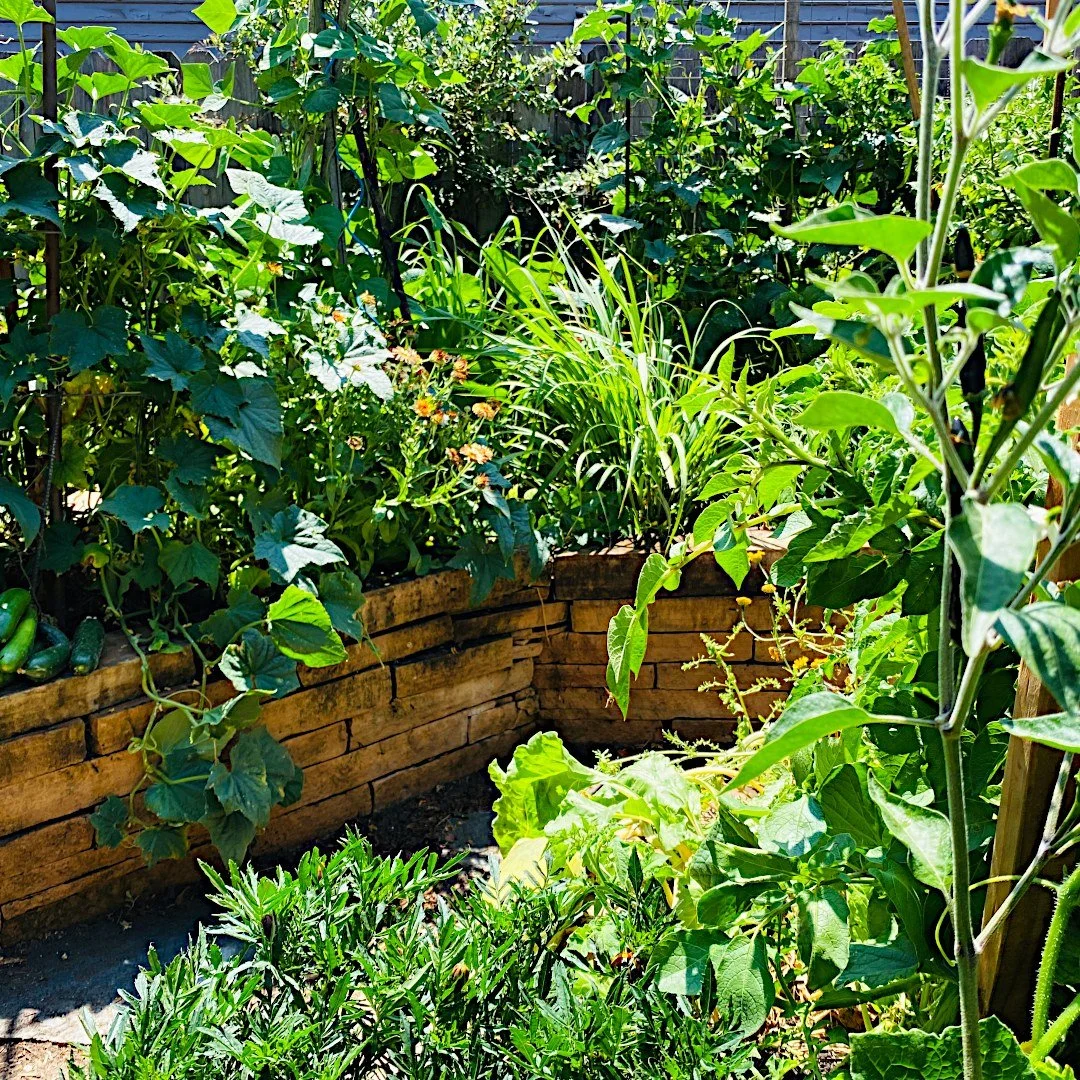
Beyond Gardens designs and builds productive edible landscapes across Santa Clara County: raised vegetable beds, fruit tree guilds, herb plantings, and multi-layer food forests. Systems are built organically, integrated with compost and greywater where appropriate, and designed so the garden feeds itself rather than depending on constant inputs.
A planted system that mimics the layers of a natural woodland while producing food at every level. Instead of a row of trees in bare ground, you get a canopy of fruit or nut trees, an understory of smaller fruit trees and large shrubs, a berry layer, herbs and perennial vegetables, groundcover, root crops, and vines climbing through it.
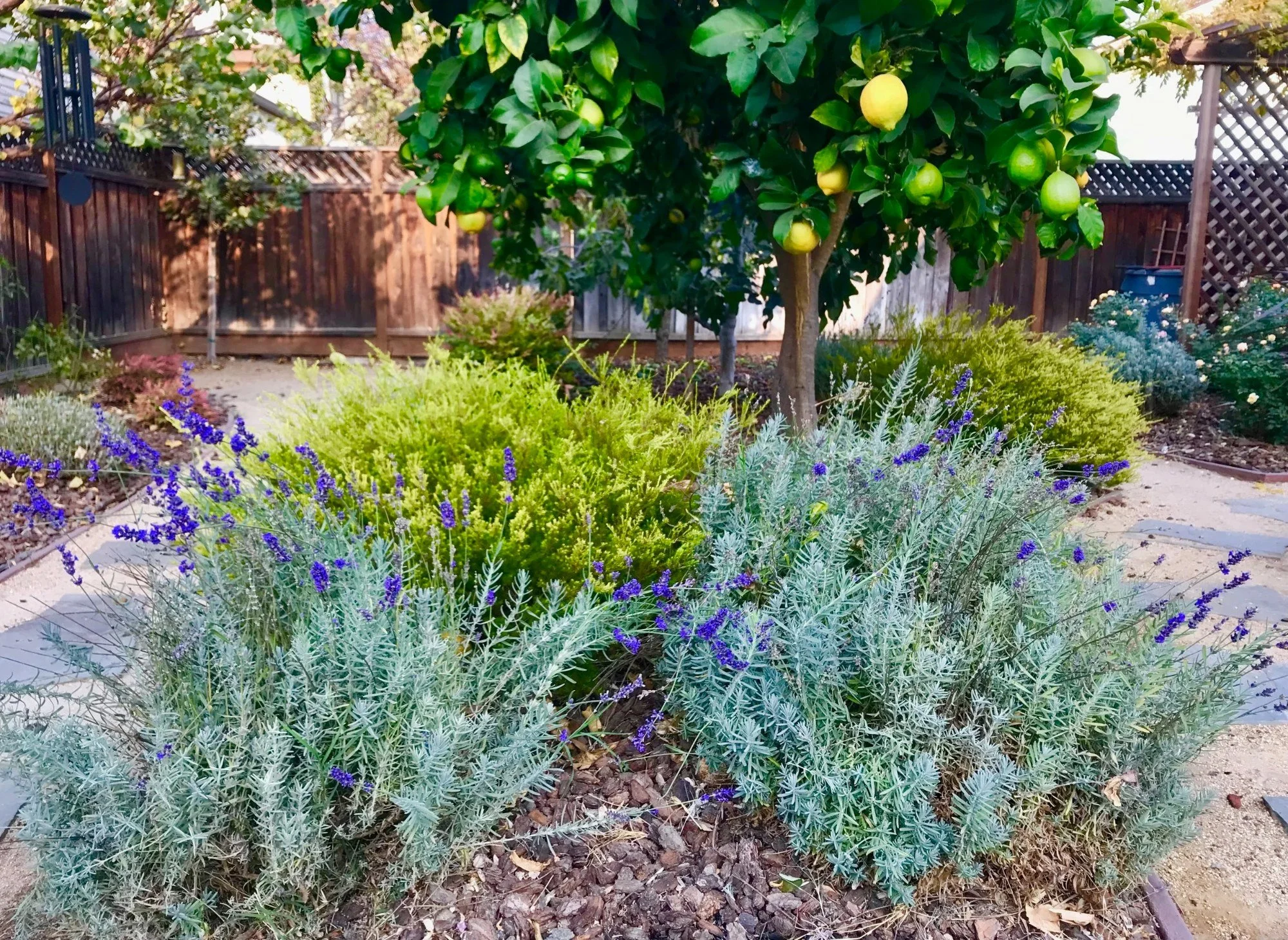
The layers work together. Nitrogen fixers feed the trees. Aromatic herbs confuse pests. Groundcover holds moisture and suppresses weeds so you are not mulching bare soil every year. Once established, a food forest needs progressively less from you, which is the opposite trajectory of an annual vegetable bed.
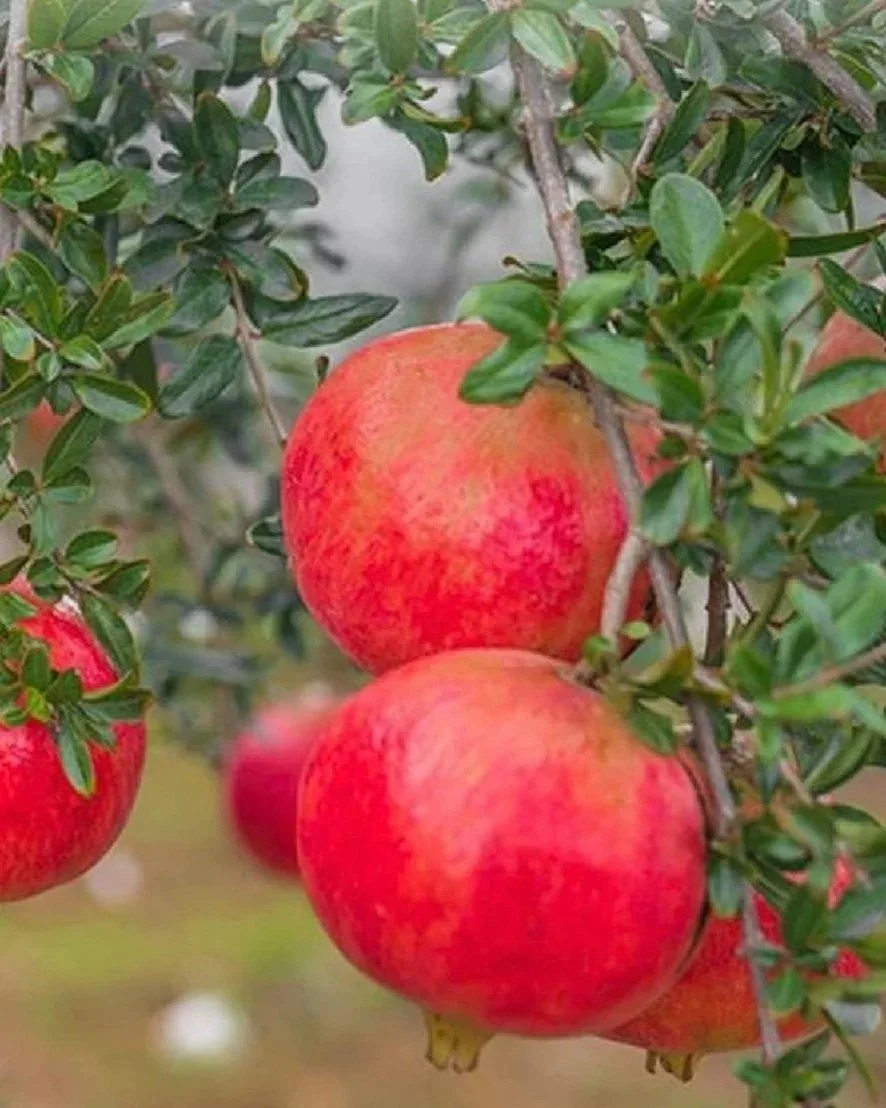
In a Santa Clara County back yard, that might mean stone fruit and citrus overhead, currants and pomegranate beneath, artichokes and rhubarb at knee height, strawberries and creeping herbs below, and grapes on the fence.
What we build
Raised beds
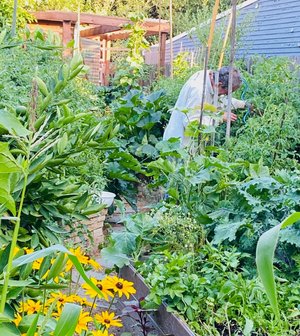
Built from durable, untreated material, sized so you can reach the middle without stepping in, filled with real soil rather than bagged mix, and plumbed into drip irrigation from day one.
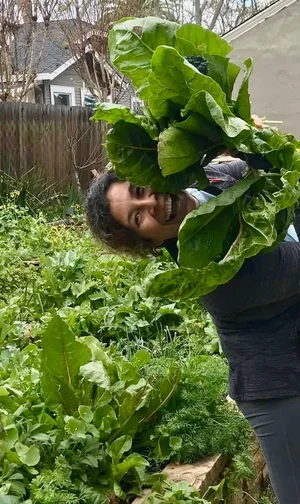
In-ground beds
Often better than raised beds where soil can be improved, because roots can go where they want and the bed does not dry out from all sides.
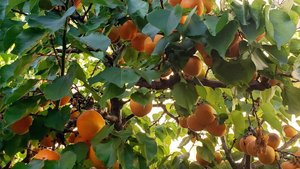
Fruit trees and guilds
Variety selection matters enormously here. Chill hours, disease resistance, rootstock, and pollination partners determine whether a tree fruits well or frustrates you for a decade. Trees are planted with companion plantings that support them.
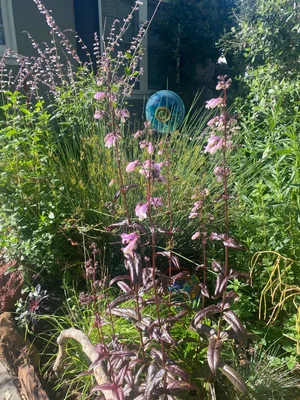
Herb plantings and spirals
Placed on the path you actually walk, because herbs planted at the back of the yard do not get used.
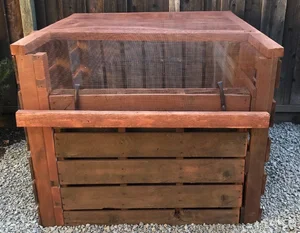
Compost systems
Bins, bays, or worm systems sized to your household. Kitchen and yard waste becomes the fertility that feeds everything else, which is what “produce no waste” means in practice.
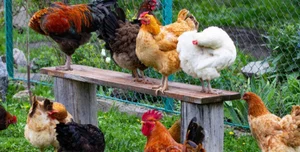
Chicken coops
Where you want them. See Landscape Carpentry and Structures
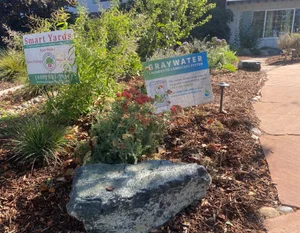
Greywater integration
Fruit trees are ideal greywater recipients and can carry much of their summer water demand on laundry water.
See Greywater Systems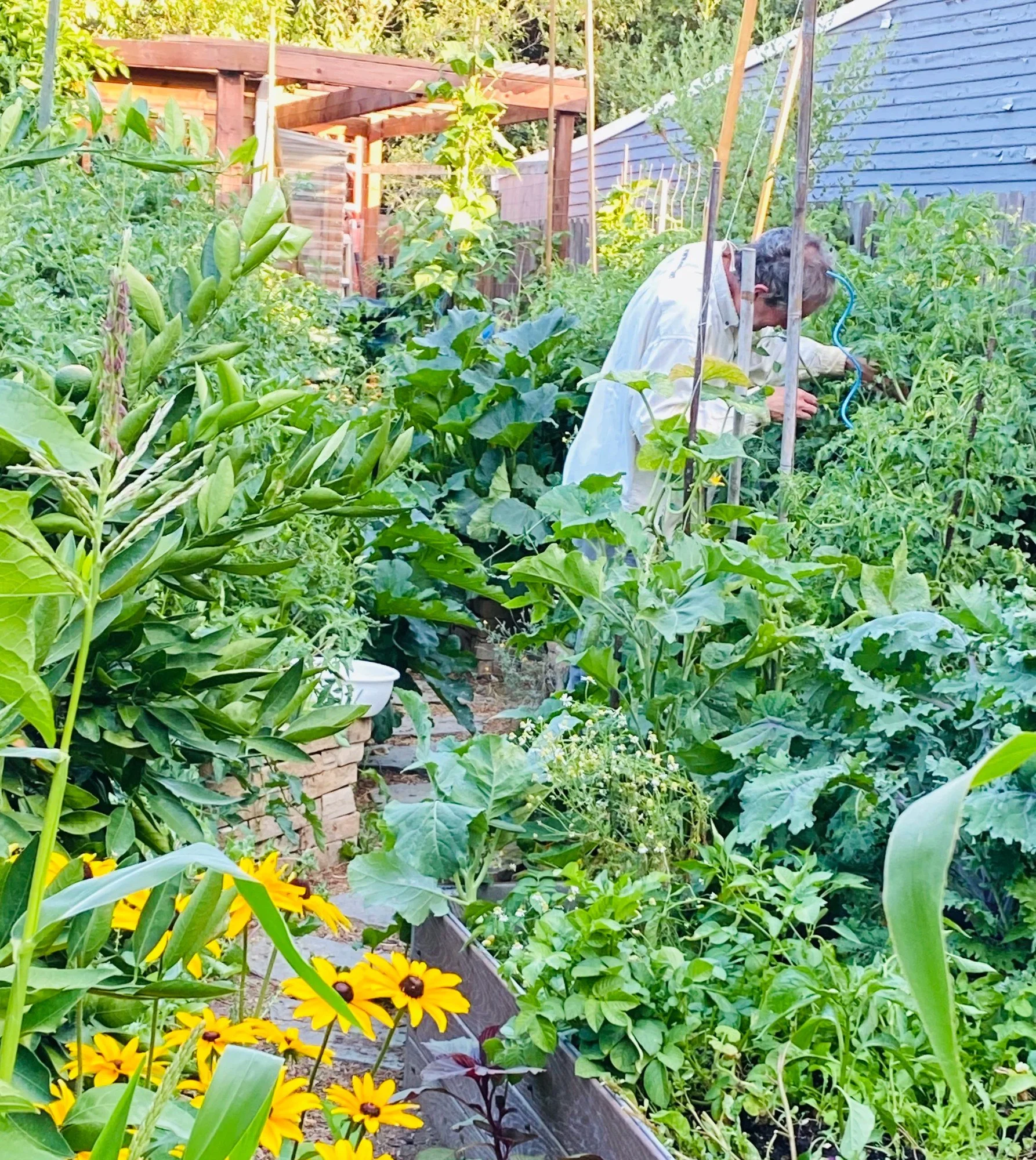
How much space
do you need?
Less than most people assume. A narrow side yard supports espaliered fruit and a vertical herb wall. A standard suburban back yard can hold a genuine multi-layer food forest. Even a front yard parking strip can be productive, and those marginal edges are often the most underused space on a property.
The constraint is usually sun, not square footage. Six hours of direct summer sun is the working minimum for most fruiting crops. We map that during the site visit before promising anything.
-
Not directly. Greywater is appropriate for fruit trees, berry canes, and ornamentals, delivered below mulch. Root vegetables and leafy greens should be watered with potable or captured rainwater.
-
More than a native garden and less than a vegetable plot. The first two or three years need regular attention: watering, mulching and shaping. After that a mature system mostly needs seasonal pruning, mulch and harvest.
-
Yes. We build soil with compost, mulch and cover rather than synthetic fertiliser, and manage pests without synthetic pesticides. Anything grown in a garden we build should be safe to eat straight off the plant.
-
Fallen fruit attracts wildlife, so we design for that: sensible spacing, clear ground under the trees, and varieties that ripen in a manageable window. Regular harvest and clean-up is the single most effective control.
-
Yes. We walk clients through pruning, watering and harvesting at handover, and we run workshops on growing food, soil and water. Several clients start with us maintaining the garden and take it over once they are confident.