
Drip Irrigation and Rainwater Harvesting
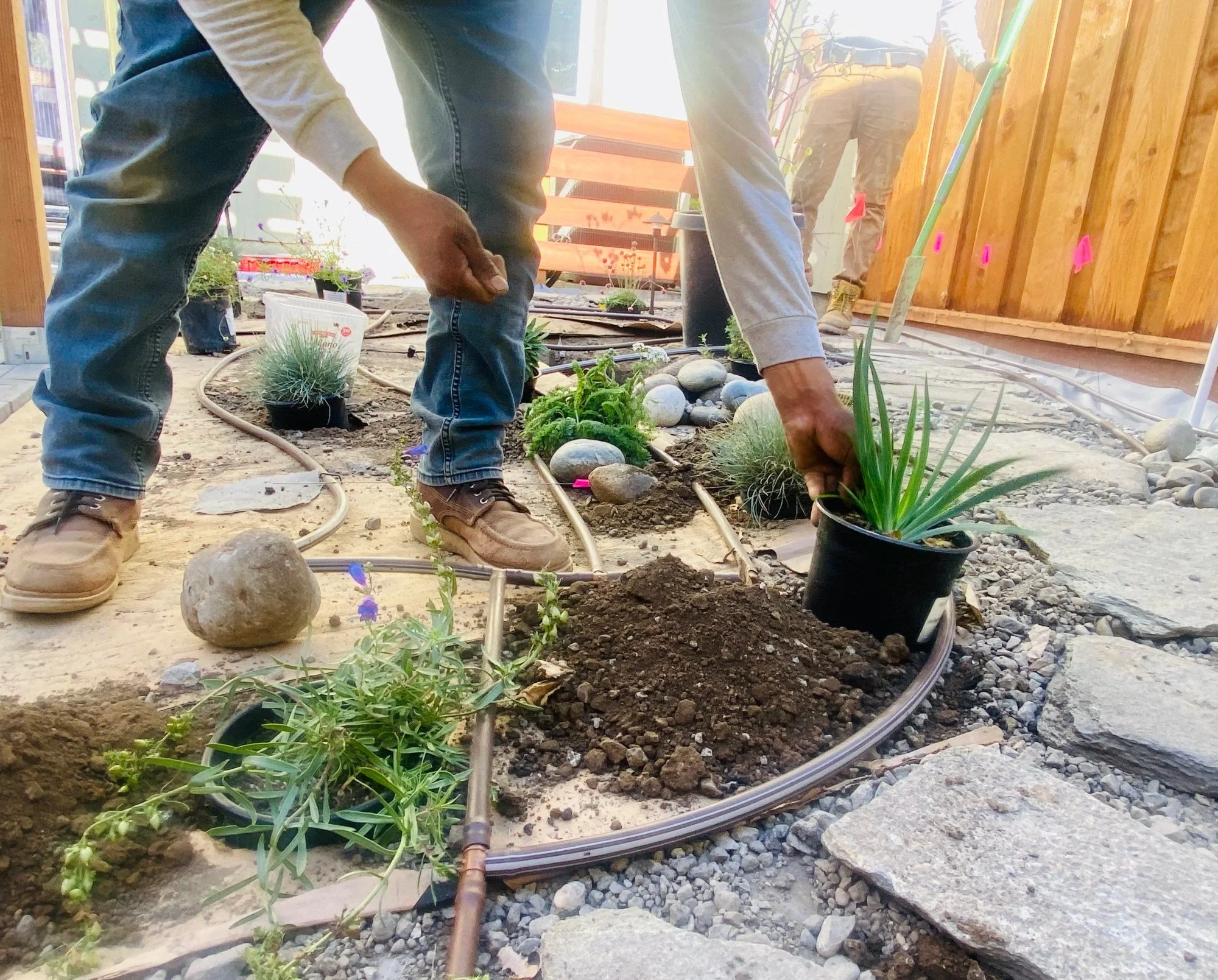
Beyond Gardens designs and installs water-efficient irrigation for Santa Clara County gardens: drip systems, smart controllers, sprinkler-to-drip conversions, rain gardens, and rainwater capture. Most retrofits take two to five days. The goal is delivering exactly what each plant needs at the root zone while keeping storm runoff on your property.
Spray heads lose water to wind, evaporation, and overspray onto pavement, and they wet leaves in a climate where wet foliage in summer invites disease. Drip puts water at the root zone, under mulch, where it is absorbed rather than lost.
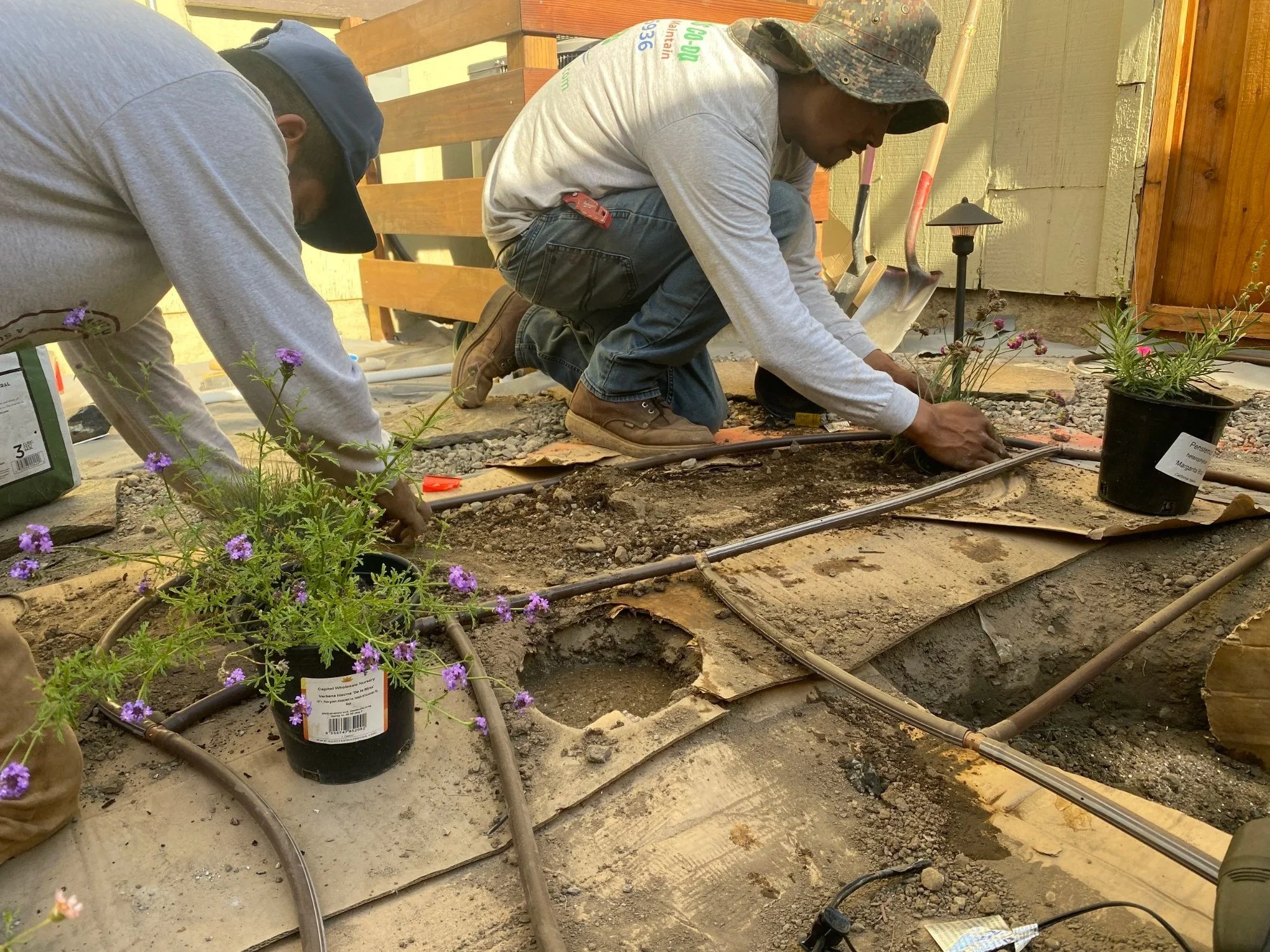
A sprinkler-to-drip conversion is one of the highest-value retrofits available on an existing garden. It usually reuses your existing valves and mainline, so the work is faster and cheaper than people expect.
What is rainwater harvesting,
and does it work in a
dry climate?
It works precisely because the climate is dry. Nearly all our rain arrives in a few concentrated months, and most properties are engineered to shed it as fast as possible. Rainwater harvesting reverses that.
Two approaches, often combined:
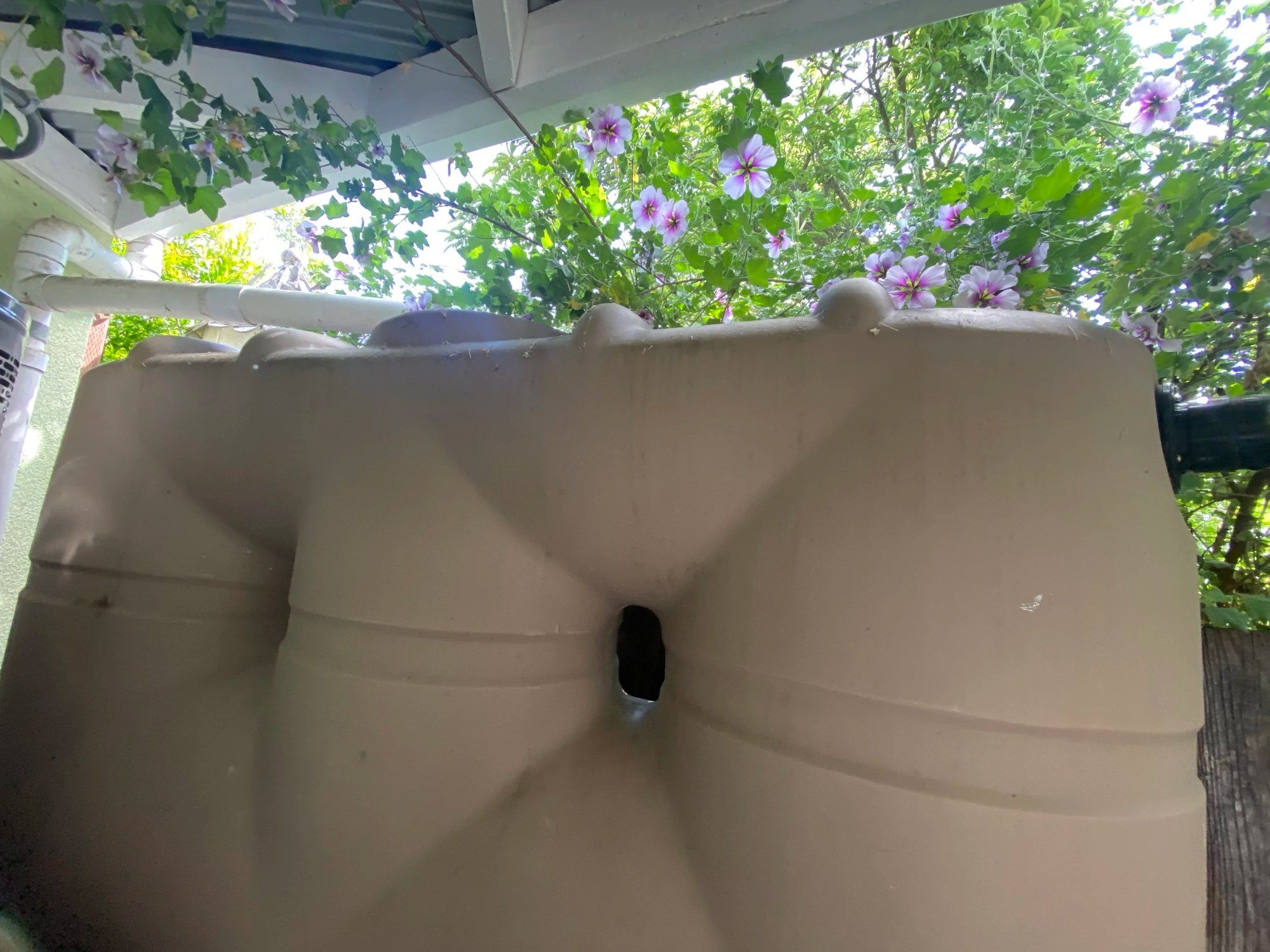
Active harvesting (tanks)
Cisterns and rain barrels that store roof runoff for later use. Useful for vegetable beds and containers, and satisfying to use, though storage volume is limited relative to a season’s demand.
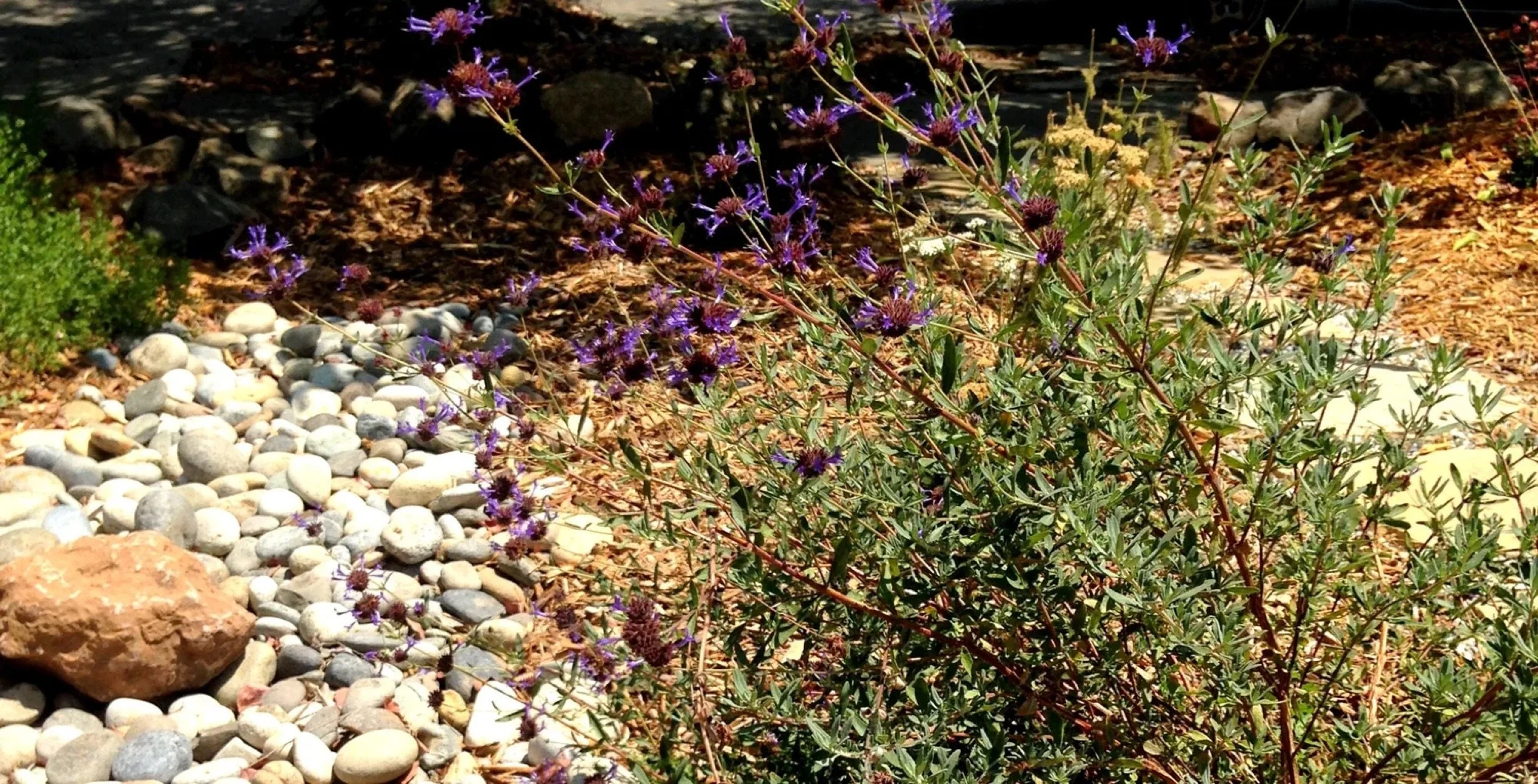
A rain garden does double duty: it manages runoff that would otherwise flood a low corner or flow to the storm drain, and it supports a distinct plant community that tolerates seasonal saturation followed by long dry.
Passive harvesting (earthworks)
Shaping the ground into swales, basins, and rain gardens that catch roof and hardscape runoff and let it soak into the soil. No tanks, no pumps, no maintenance. The soil becomes the storage tank, and the water is there in the root zone when plants need it. This is usually the better first investment.
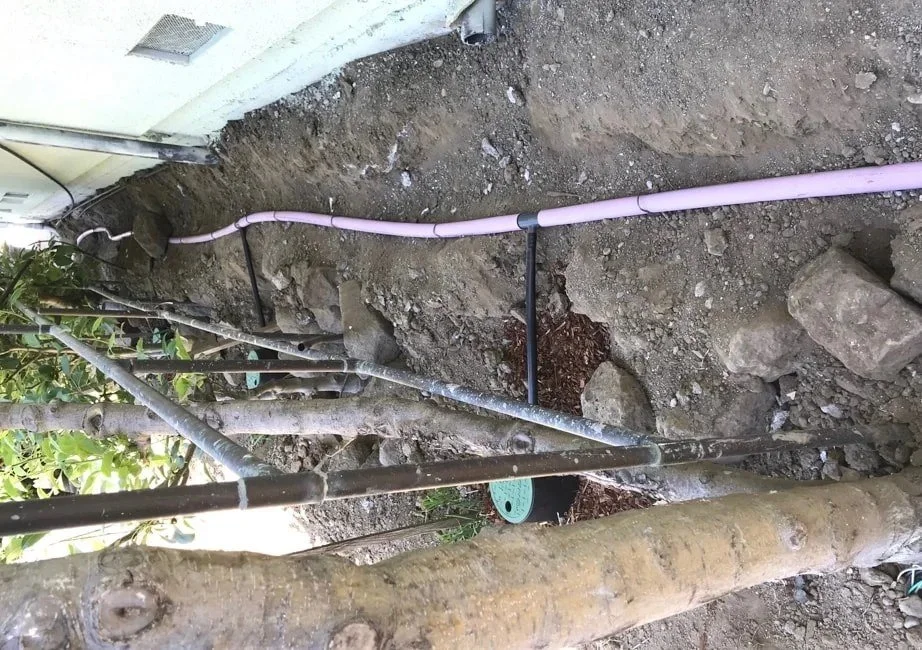
What does an irrigation project include?
Audit of the existing system, zone by zone, including pressure and coverage
Sprinkler-to-drip conversion where appropriate
Drip line layout matched to actual plant water needs, hydrozoned so thirsty and dry plants are not on the same valve
Smart controller installation and programming, including seasonal adjustment
Leak and break repair
Swales, basins, and rain garden earthworks
Downspout redirection and roof water routing
Cistern and rain barrel installation where useful
-
During establishment, yes. Most California natives need supplemental water through their first two summers. After that, many need little or none, though summer-dormant species and non-natives in the palette will still want occasional deep watering. We design the system so it can be dialed back rather than ripped out.
-
Often we can. Many systems only need a new controller, corrected zoning and repairs at the emitters. We audit what is there first and tell you honestly whether repair or replacement is the better spend.
-
Rebates for controllers and efficiency upgrades come and go with local water agencies. We keep track of what Santa Clara County is offering and will tell you what your project qualifies for.
-
Grouping plants with similar water needs onto the same irrigation zone. It means thirsty plants can be watered properly without drowning drought-tolerant ones, and it is the single biggest efficiency gain in most retrofits.
-
No, when it is built to drain. A rain garden is designed to infiltrate within a day or two, which is well short of the time mosquitoes need to breed. Standing water for longer than that means the soil or the sizing needs correcting.